
1. Introduction
See the Table in Item 6 below or Table 10.2 of the Home Page for a Summary of the Israel’s 7 Religious Festivals Prophetically Point to Jesus’ Fulfillment.
Col 1:15-20 “
15 He is the image of the invisible God, the firstborn over all creation.
16 For by him all things were created: things in heaven and on earth, visible and invisible, whether thrones or powers or
rulers or authorities; all things were created by him and for him.
17 He is before all things, and in him all things hold together.
18 And he is the head of the body, the church; he is the beginning and the firstborn from among the dead, so that in everything he might have the supremacy.
19 For God was pleased to have all his fulness dwell in him,
20 and through him to reconcile to himself all things, whether things on earth or things in heaven, by making peace through
his blood, shed on the cross.”
2. The 7 Religious Festivals of Israel point Prophetically to Jesus, who has already fulfilled the prophecies of the first 4. The other 3 Festivals prophetically point to the end times and the second coming of Jesus.
“There is a growing interest among Christians worldwide in fulfilling Israel’s seven great festivals, which is why thousands of them attend the Christian celebration of the seventh festival, namely the Feast of Tabernacles, in Jerusalem every year. Many people are now exploring the deeper meaning and prophetic application of these festivals, gaining new insight into biblical truths.
The cycle of the seven major religious festivals celebrated annually by Israel according to Leviticus 23 sheds clear light on the counsel of the Lord for the salvation and spiritual future of Israel and the nations. In this, we can follow the way of salvation that begins at the cross and the first cleansing of our sin, continues after the resurrection life and the fulfilment of the Holy Spirit, and then leads through the long road of world evangelism to the end of the church age. After this, the carrying away of the true church takes place, then the destruction of the wicked kingdoms during the seven-year tribulation, followed by the public coming of Christ and the establishment on earth of his kingdom of peace and righteousness.
The Lord affirms in His Word that these festivals are not human in origin, but are instituted by Himself to reveal His plan for the salvation of lost humanity. In view of its future fulfilment, the festivals should be celebrated annually in the correct order: “These are the festivals of the Lord… which ye shall cry out at their appointed time” (Lev. 23:4). The systematic succession of the seven festivals reflects a clear prophetic program.
Because these Festivals indicate a final fulfilment in the Messiah, they are in their original form “a shadow of things to come; but the body [i.e., their prophetic substance] belongs to Christ” (Col. 2:16-17). All seven are Christ feasts that take concrete form in Him. The feasts are divided into two groups—the first group of four were all fulfilled during events surrounding Christ’s first coming, up to the outpouring of the Holy Spirit, while the last three point to events surrounding his second coming. The long passage of time between the two groups of festivals prophetically indicates the church age that passes between the Lord Jesus’ first and second coming.
A very important aspect of these festivals to consider is that they, in their original, shadowy form, were given to Israel to observe so that they could be prepared for the coming of the Messiah. In the festivals’ fulfilled, New Testament form, however, they are relevant to all people on earth because they contain a blueprint of God’s redemptive plan for all mankind. The moment the first of the seven festivals was fulfilled, the perspective shifted from Israel to the whole world, and it was the Lord’s command to his disciples that all people should take note of it because God’s plan of salvation is meant for them all – no one is excluded.”1
3. The first 4 Festivals that have already fulfilled Prophecies.
| Feast nr. Name. Jewish name. | Jewish date of the Feast | Gregorian Callender 30 AD | Jesus fulfil-led the pro-phesy | Jewish use and meaning of the feast. | Prophetic meaning and its fulfilment. | |
| Date | Week Day | |||||
| 3.1 The Feast of the Pass-over. Pesach | 14 Nisan | 6 A-pril2 | Thurs-day 2 | Jesus’ cruci-fixion as the Easter lamb. | The Passover is celebrated in the Jewish first month of Nisan. Then it is Spring in the Northern Hemisphere, and it symbolizes new life. It is the day Israel was able to be freed from slavery after about 400 years from Egypt. Ex 12:3-7 & 13 “3 Tell the whole community of Israel that on the tenth day of this month each man is to take a lamb for his family, one for each household. 4 If any household is too small for a whole lamb, they must share one with their nearest neighbour, having taken into account the number of people there are. You are to determine the amount of lamb needed in accordance with what each person will eat. 5 The animals you choose must be year-old males without defect, and you may take them from the sheep or the goats. 6 Take care of them until the fourteenth day of the month, when all the people of the community of Israel must slaughter them at twilight. 7 Then they are to take some of the blood and put it on the sides and tops of the door-frames of the houses where they eat the lambs. …….. 13 The blood will be a sign for you on the houses where you are; and when I see the blood, I will pass over you. No destructive plague will touch you when I strike Egypt.” | The fulfilment of the Passover was during the crucifixion of the Lamb of God who became man in the fullness of time to lay down his life for us. 1 Peter 1:18-19 “18 For you know that it was not with perishable things such as silver or gold that you were redeemed from the empty way of life handed down to you from your forefathers, 19 but with the precious blood of Christ, a lamb without blemish or defect.” Jesus was crucified on Thursday the 14th of Nisan (6 April 30 AD)2, on the day of the Passover celebration of that year. He died at the ninth hour (3 p.m.) according to Mark 15:34-37 , at exactly the same hour when the lamb was slaughtered at the first Passover in Egypt. He resurrection was early on the Sunday morning. Also see Loading... Joh 1:29 “The next day John saw Jesus coming towards him and said, “Look, the Lamb of God, who takes away the sin of the world!”Loading... |
| 3.2 Feast of Unlea-vened Bread. Hag Ha-Matzot | 15-22 Nisan | 7-14 A-pril2 | Friday to Fri-day 2 | Jesus was in the tomb and He was clean. With-out sin. | The second festival follows the first one without interruption and is a direct result of it according to Leviticus 23:6 “On the fifteenth day of that month the LORD’s Feast of Unleavened Bread begins; for seven days you must eat bread made without yeast.” According to John 19:31 , the Sabbath that directly followed Christ’s crucifixion was a great day. The reason for this was that it was the important first day of the Feast of the Unleavened Bread and therefore, according to prescription, it was also celebrated as a Sabbath. For orthodox Jews, the significance of this festival lies in self-examination and humiliation. Leaven is an image of sin, therefore eating unleavened bread symbolizes the pursuit of a holy life. Loading... | Paulus says in 1 Corinthians 5:6-8 “6 Your boasting is not good. Don’t you know that a little yeast works through the whole batch of dough? 7 Get rid of the old yeast that you may be a new batch without yeast — as you really are. For Christ, our Passover lamb, has been sacrificed. 8 Therefore let us keep the Festival, not with the old yeast, the yeast of malice and wickedness, but with bread without yeast, the bread of sincerity and truth.” “Just as the Jews of old searched their homes on their knees in candlelight to eject every crumb of bread baked with leaven, we too, on our knees in the light of God’s Word, must search our lives and renounce all vice and evil. Sin must be confessed and forsaken (Prov. 28:13). Self-examination and rededication to the Lord should be regular activities in our spiritual life. David prayed: “Ground me, O God, and know my heart; test me and know my thoughts; and see if there is with me a way of sorrow, and lead me on the eternal way!” (Ps. 139:23-24).1 |
| 3.3 Feast of the First-Fruits. Bik-kurim | The day after the Sab-bath during the Feast of Unlea-vened Bread. | 9 A-pril2 | Sun- day2 | Jesus’ Resur-rection. | Moses wrote in Le 23:10-11: 10 “Speak to the Israelites and say to them: ‘When you enter the land I am going to give you and you reap its harvest, bring to the priest a sheaf of the first grain you harvest. 11 He is to wave the sheaf before the LORD so it will be accepted on your behalf; the priest is to wave it on the day after the Sabbath.” Israel is a winter rainfall area and during the spring the first fruits of the barley are offered before the Lord as a moving offering. This was to be done expressly on Sunday (the day after the Sabbath), and would also have the particularly weighty significance of pleasing the people to God. In the spring month, Israel was liberated from Egypt and stood at the beginning of a new life. | I Cor 15:20:” 20 But Christ has indeed been raised from the dead, the firstfruits of those who have fallen asleep.” Jesus rose on this day according to Mark 16:9 : “When Jesus rose early on the first day of the week, he appeared first to Mary Magdalene, out of whom he had driven seven demons. “ “It is important to note the stipulation that this festival was to be celebrated specifically on a Sunday. It prophetically represents a transition from the old covenant to the new covenant. Sunday is the first day of a new week, or dispensation, in God’s counsel for man. In this dispensation, the resurrection of Jesus is spontaneously celebrated every week on Sundays as the Lord’s day. The feast of the firstfruits in Leviticus 23 is the earliest indication in the Old Testament of a future Sunday celebration as a Feast of Christ. On that day we preach the message: He is risen, He is alive! The Lord Jesus Himself addressed the first meeting of the new dispensation on the Sunday of His resurrection, and a week later, again on Sunday, the second one (Loading... John 20:19-29 ). After that, the disciples spontaneously gathered on Sundays (cf. Eph. Hand. 20:7 and 1 Cor. 16:1-2), while the outpouring of the Holy Spirit as the spiritual equipment for world evangelism also took place on Sunday.” 1 Loading... |
| 3.4 Feast of the Har-vest. Sha-vuot. | 6 Sivan | 27 Mei2 | Sun-day | Jesus sent the Holy Spirit. | The Celebration of the Feast of the Harvests or Feast of Pentecost The feast of Pentecost is derived from the Greek word “pentecoste” meaning fiftieth. It was to be celebrated seven weeks after the Feast of the First Fruits. The Jews counted the first day included when referring to a period. Seven weeks gives 7×7=49 days. Add up the first day and get 50 days which then fell again on a Sunday. Lev 23:15-16: “15 “‘From the day after the Sabbath, the day you brought the sheaf of the wave offering, count off seven full weeks. 16 Count off fifty days up to the day after the seventh Sabbath, and then present an offering of new grain to the LORD.” “On this day, the Jews commemorate the formal beginning of the dispensation of the law. They believe that on the 50th day after the celebration of the Passover and their exodus from Egypt, the liberated Israelites were at Mount Sinai where Moses received the Ten Commandments (Ex. 19:1-3). It was for such an orthodox Feast of Pentecost that Jews from different countries gathered in Jerusalem on that particular Sunday morning when the Holy Spirit was poured out, as described in Acts 2.” 1 | The Outpouring of the Holy Spirit Jesus sent the Holy Spirit according to John 16:7 :” But I tell you the truth: It is for your good that I am going away. Unless I go away, the Counsellor will not come to you; but if I go, I will send him to you..” Jesus the 40th day after Sy resurrection ascends heaven according to Acts 1:2-3: “2 until the day he was taken up to heaven, after giving instructions through the Holy Spirit to the apostles he had chosen. 3 After his suffering, he showed himself to these men and gave many convincing proofs that he was alive. He appeared to them over a period of forty days and spoke about the kingdom of God..” After another 10 days, the Holy Spirit was poured out on the 50th day during the Feast of Pentecost’ The Desolation of Jerusalem. Loading... Luk 21:20 : “ “When you see Jerusalem being surrounded by armies, you will know that its desolation is near“ Jesus gave this prediction of the fall of Jerusalem on Tuesday, April 4, 30 A.D. 2. Jerusalem was then totally destroyed approximately in 70 AD, 40 years later after a revolt of the Jews against the Roman authorities and they were spread around the world.Loading... |
4. Collecting the harvest
The long period for collecting the harvest, almost 4 months, prophetically indicates the long time from the outpouring of the Holy Spirit until the Rapture takes place at the last trumpet. It is expected to be 2000 years plus for the collection of the spiritual harvest.
5. The other 3 Festivals prophetically point to the end times and the second coming of Jesus.
| Feast nr. Name. Jewish Name. | Jewish Date of the Feast | Jewish use and meaning of the Feast | Date | Prophetic meaning and its fulfilment. |
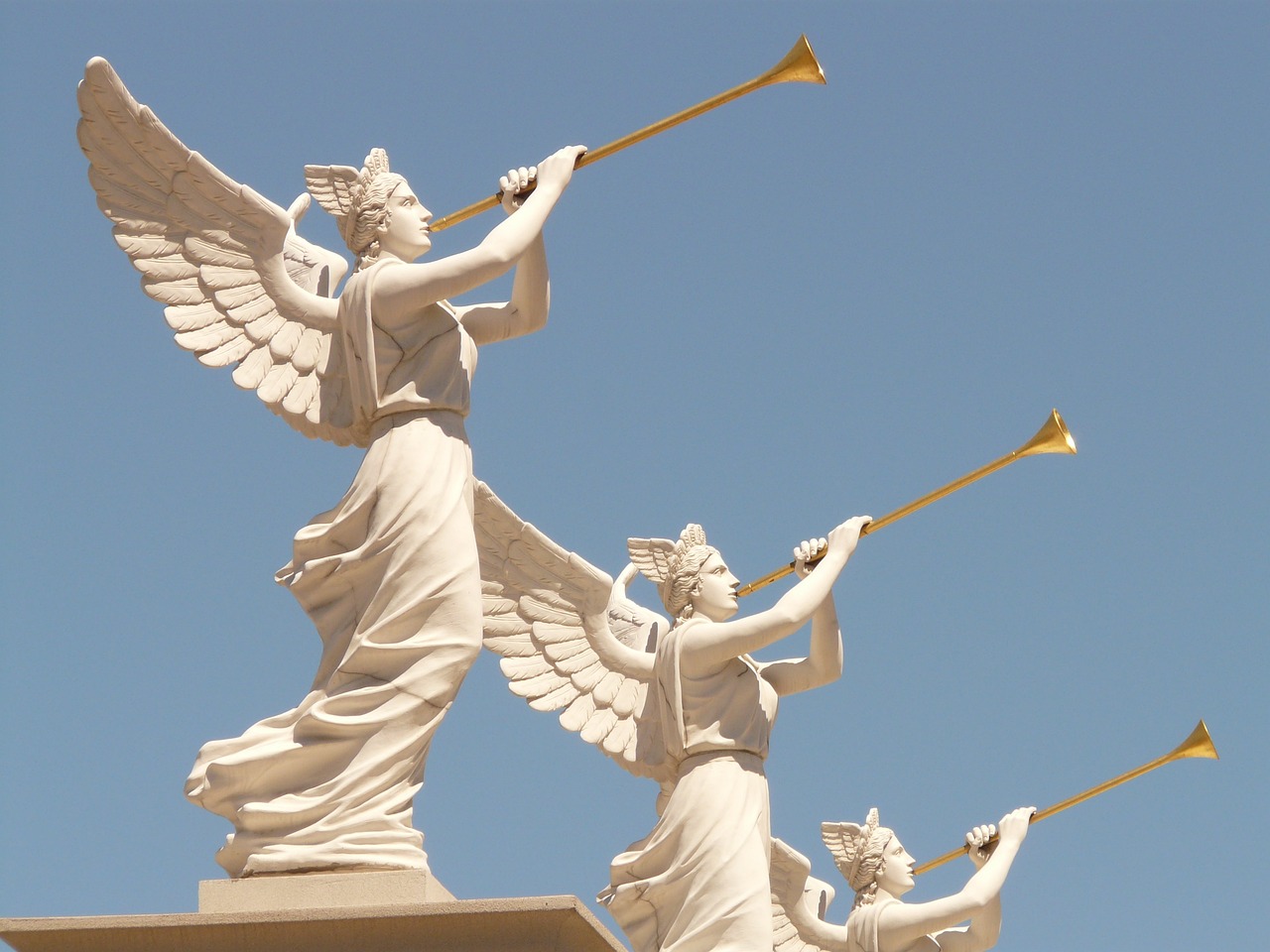
| 5.5 The Feast of the Trum-pets. Rosh Hash-anah. | 1&2 Tisjri | 5.5.1 The Feast of the Trumpets For the Jews, this is the end of the harvest season. The ram’s horn (shofar) is then blown this day at different times of the day in their synagogues. See Lev 23:24: ““Say to the Israelites: ‘On the first day of the seventh month you are to have a day of rest, a sacred assembly commemorated with trumpet blasts.” On the second day, towards evening, the last trumpet blows to announce the final collection of the harvest. This is not the last of all trumpets, but the last trumpet of the harvest festival. | Only God knows when. | The Rapture The following texts indicate that the Rapture will take place at the final trumpet on earth. I Cor 15:50-52: “50 I declare to you, brothers, that flesh and blood cannot inherit the kingdom of God, nor does the perishable inherit the imperishable. 51 Listen, I tell you a mystery: We will not all sleep, but we will all be changed — 52 in a flash, in the twinkling of an eye, at the last trumpet. For the trumpet will sound, the dead will be raised imperishable, and we will be changed.” Also see 1 Tes 4:16-17: “16 For the Lord himself will come down from heaven, with a loud command, with the voice of the archangel and with the trumpet call of God, and the dead in Christ will rise first. 1Th. 4:17 After that, we who are still alive and are left will be caught up together with them in the clouds to meet the Lord in the air. And so we will be with the Lord for ever.” Mat 24:34 :” I tell you the truth, this generation [Or race] will certainly not pass away until all these things have happened.” “The generation that is going to experience the rapture, and stay behind, is going to see all these things Jesus told about. This is the context and perspective of this passage of Scripture. Should the rapture take place today, a large portion of our present generation will go through the tribulation and witness all these end-time events.” 3 “If we look at the little word used in the Afrikaans Bible – “carried away” – and we dig deeper into the root language of the Bible, we come across the following words: Greek: “harpazo” (to snatch away or take) Latin: “rapturo” (to pick up) English: “rapture” Afrikaans: “deported” The word “rapture” is therefore derived from these terms. Elsewhere, the words “carried away” and “snatched away” are used to describe how the Holy Spirit overtook Philip near Gaza and brought him to Ashdod (Acts 8:39–40) and to describe Paul’s supernatural experience of being whisked away to the third heaven (2 Corinthians 12:2–4). Therefore, there can be no doubt that the word “carried away” is used in 1 Thessalonians 4:17 to indicate that the people will be removed from earth to heaven.” 3Loading... |
| 2 to 9 Tisjri | 5.5.2 The 7 Days of Humiliation. “In Israel’s festival program, after the 1st and 2nd Tishri there follows the so-called “seven terrible days” in which believing Jews humble themselves, fast, confess their sins, and do good to others so that they may win the favor of the Lord. This is done in preparation for the great day of atonement celebrated on the 10th of Tishri, so that the Lord should bless them and not reject and condemn them.” 1 | The Seven Years of Tribulation. “These seven days prophetically mark the seven years of tribulation, which will be Daniel’s 70th year week (Dan. 9:27). In times of great distress, Israel and the nations will either seek and accept the true Messiah or enter into a covenant with the false Messiah until their own demise.. “ 1 According to Reference 4, in Revelation 1 through 4 we read the word “church(s)” nineteen times and never again thereafter. That is, Jesus will come and get His church (body of Christ) before the seven years of tribulation begin. 3 See Revelation 6 to 19. | ||
| 5.6 The Day of Atone-ment Yom Kippur. | 10 Tisjri | The Day of Atonement or the Yom Kippur Festival. In Leviticus 16, the Lord gives the precept to be made on the Day of Atonement. It is prescribed that all the sins of the people were to be symbolically placed on a goat and then it must be driven into the wilderness to die there. I Joh 2:2 : “He is the atoning sacrifice for our sins, and not only for ours but also for [Or He is the one who turns aside God’s wrath, taking away our sins, and not only ours but also] the sins of the whole world” So, Jesus had to take upon Himself all the sins of everyone in the world and die outside the city. It is the most important religious feast day in Israel, and it was traditionally the only day of the year on which the high priest could enter the Holy of Holies behind the veil to atone for the people’s sins. Leviticus 23:27: “ “The tenth day of this seventh month is the Day of Atonement. Hold a sacred assembly and deny yourselves, [Or and fast; also, in verses 29 and 32] and present an offering made to the LORD by fire.” Loading... | ???? | The Day of Judgment Mar 13:10 “And the gospel must first be preached to all nations.” With the availability of the Internet all over the world, we can assume that the gospel is available all over the world. Loading... Mat 13:40-41 : “40 As the weeds are pulled up and burned in the fire, so it will be at the end of the age. 41 The Son of Man will send out his angels, and they will weed out of his kingdom everything that causes sin and all who do evil.” Jesus’ first coming to earth was at His birth. At the Day of Judgment He comes to earth the 2nd time and will step on the Mount of Olives according to Sec 14:4: “On that day his feet will stand on the Mount of Olives, east of Jerusalem, and the Mount of Olives will be split in two from east to west, forming a great valley, with half of the mountain moving north and half moving south.” See Revelation 19 for the Second Coming of Jesus and the battle of Armageddon. Loading... |
| 5.7 Feast of Taber-nacles Sukkot. | 15 Tisjri | The Feast of Tabernacles. It was a 7-day merry festival celebrated at the end of the harvest season. Israel then stayed in temporary structures to think of the 40 years they lived in tents. Lev 23:42-43: “42 Live in booths for seven days: All native-born Israelites are to live in booths 43 so that your descendants will know that I made the Israelites live in booths when I brought them out of Egypt. I am the LORD your God.’.” | Predic-ted 2240 to 3240 4 | Christ Reigns for the 1000 Years of Peace on Earth The Hebrew year 6000 marks the beginning of the Messianic Age. It will be at sunset of September 16, 2240, on the Gregorian Calendar. 4 Add up 1000 years and get 3240. See Revelation 20:1-6 for the millennial reign of peace on earth. See Revelation 20:7-15 for the final judgment before the great white throne. See Revelation 21 and 22 for the new heavens and new earth. |
6. SUMMARY OF ISRAEL’S SEVEN RELIGIOUS FESTIVALS PROPHETICALLY POINT TO JESUS’ FULFILLMENT
| ISRAEL’S SEVEN RELIGIOUS FESTIVALS PROPHETICALLY POINT TO JESUS | ||
| Festival nr. and Name. (Jewish Name) | Date | Jesus’ fulfilment of the prophecy of the feast. |
| 1. Feast of Passover. (Pesach) The Passover lamb was slaughtered before the Israelites came out of Egypt. They had to smear the door frames at night to be protected from the death angel that night. | 14 Nisan | The blood of the Passover lamb prophetically referred to the Passover lamb, Jesus, who was crucified on Thursday, April 6, AD 30. He died the time when the Passover lamb had to be slaughtered. His blood is God’s redemptive plan to cleanse all who accept Him from sin. |
| 2. The Feast of the Unleavened Bread. (Hag Ha-Matzot) This festival begins the day after Passover and lasts for 7 days during which the Jews then eat unleavened bread. The first day of this festival, according to prescription, is also a Sabbath. | 15 to 22 Nisan | Leaven is an image of sin, therefore eating unleavened bread symbolizes the pursuit of a holy life. Jesus was in the tomb on this Friday (which was also a Sabbath) and He was pure and without sin. |
| 3. The Feast of the Firstfruits. (Bikkurim) This day, according to prescription, falls on the day after the Sabbath and then the Jews must bring the firstfruits (usually a barley sheaf) to the priest. It falls on the beginning of spring. | 17 Nisan | The year Jesus was crucified, this Feast of the Firstfruits fell on the first day of the week, or Sunday when Jesus was risen. He was then the grain of wheat that fell into the ground and died. On the third day He became the Firstborn who rose from the dead. |
| 4. The Feast of the Harvest or Pentecost. (Shavuot) The Jews commemorate how, 50 days after they moved out of Egypt, they received the law of the Lord as a guide. | 6 Sivan | This festival is 50 days after the previous festival and so it was again on a Sunday. Jesus then sent the Holy Spirit to guide His followers in all truth, and His Church (Bride) was established on earth. |
| 5. The Feast of the Sound of the Trumpet. (Rosh Hashanah) 5.1 Blow the Ram’s horns for 2 days. Ramshorns are blown at certain times at the end of the harvest. 5.2 The 7 days of humiliation. Jews humble, fast, confess their sins, do good to others so they can win the favor of the Lord. | 1&2 Tisjri 3 to 9 Tisjri | This festival and the following 2 festivals have not yet come to fruition. It will be with the blowing of the heavenly trumpets. Those who died in Christ will meet Him first in the sky and then His followers who are still alive with the rapture. These seven days prophetically mark the seven years of the tribulation, which will be Daniel’s 70th year-week |
| 6. The Great Day of Atonement. (Yom Kippur) The only day the High Priest could enter the Holy of Holies to atone for the people’s sins. | 10 Tisjri | This day will be Jesus’ second coming to earth when, according to Zechariah, He will step on the Mount of Olives and fight for His people against the Gog and the Magog at the battle of Armageddon. |
| 7. The Feast of Tabernacles. (Sukkot) This is a feast of joy to thank the Lord for the harvest. They then live in huts of branches and leaves to think of 40 years they roamed the desert in tents. | 15 to 22 Tisjri | Jesus reigns for a thousand years of peace on earth. According to the Hebrew calendar, the year 6000 begins by the year 2240.The last judgment before the great white throne.The new heavens and the new earth. |
| Prepared by Pieter Oberholzer (November 2023) | ||
7. References.
- Google translation of “Die Letterlike Vervulling van Israel se Sewe Feeste deur Prof. Johan Malan, Mosselbaai (Februarie 2013). https://www.bibleguidance.co.za/Afrartikels/Israelfeeste2.htm
2. Jesus’ Chronicles by Pieter Oberholzer https://jesus-chronicles.com
3. Google translation of “Die Wegraping deur Dr. Leonie Pretorius.” https://leoniepretorius.co.za/wegraping
4. Year 6000. Wikipedia. https://en.wikipedia.org/wiki/Year_6000#:~:text=According%20to%20classical%20Jewish%20sources,theme%20of%20the%20Messianic%20Age.
5. Scripture quotations taken from The Holy Bible, New International Version® NIV®
Copyright © 1973 1978 1984 2011 by Biblica, IAD. TM
Used by permission. All rights reserved worldwide.Introduction